
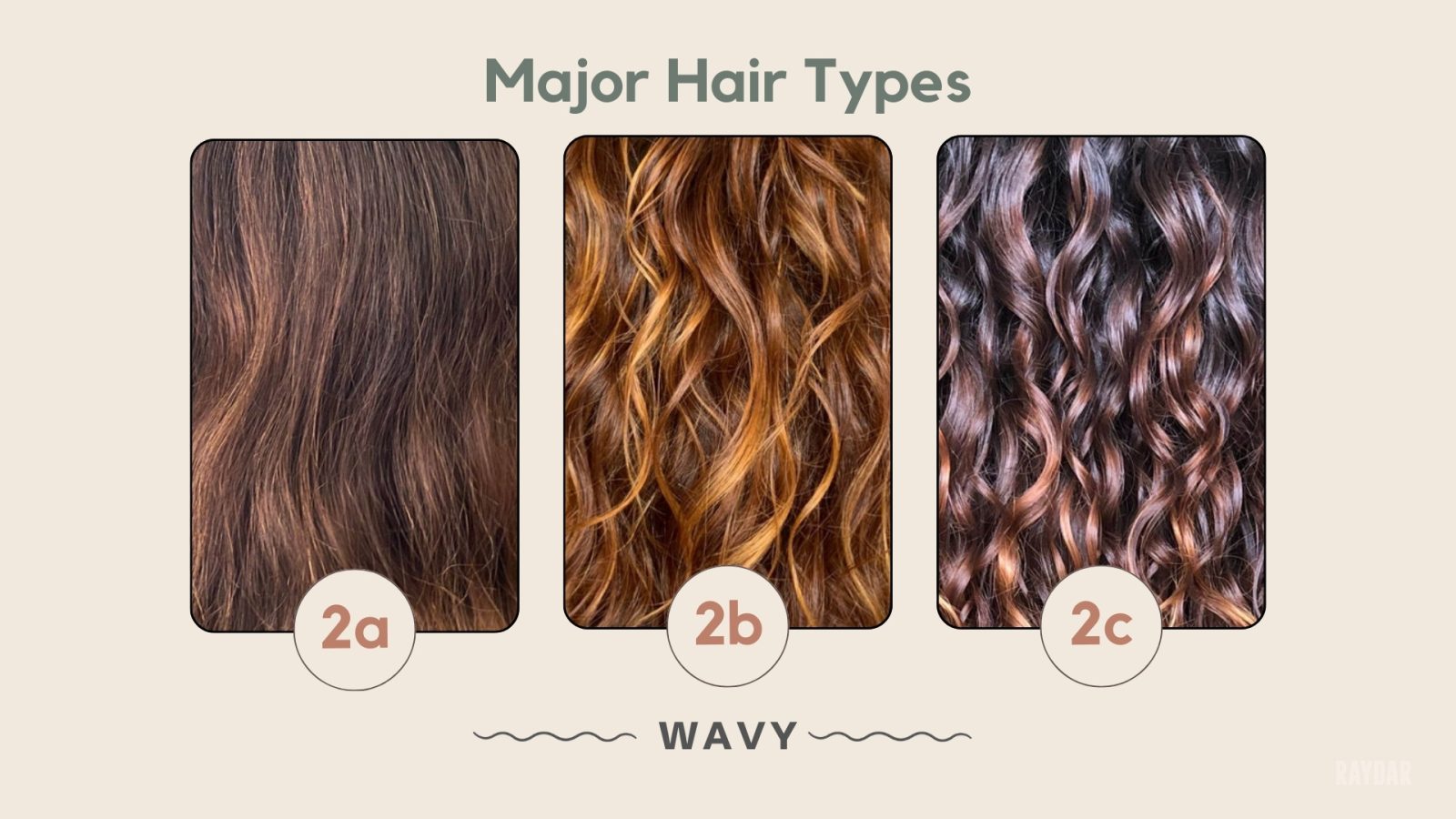
Many people assume wavy hair is simply a less curly version of curly hair, but the reality is more nuanced. Wavy hair, classified as Type 2 in the Andre Walker Hair Typing System introduced in the 1990s, has its own unique structure and care requirements. Unlike straight or curly hair, wavy hair sits in a middle zone that demands specific attention to moisture, product weight, and styling techniques. This guide breaks down the three subtypes—2A, 2B, and 2C—and offers practical advice for each.
How the Andre Walker System Defines Wavy Hair Subtypes
The Andre Walker Hair Typing System, developed by celebrity hairstylist Andre Walker in the 1990s, categorizes hair into four types: straight (Type 1), wavy (Type 2), curly (Type 3), and coily (Type 4). Wavy hair is further divided into three subtypes based on wave pattern, thickness, and behavior. Public records covering this story are gathered in Hair
Type 2A features loose, fine waves that are easy to straighten. This subtype often has a slight bend from root to tip and tends to be less prone to frizz. People with 2A hair may find that their waves become more defined with lightweight products but can fall flat with heavy creams or oils.
Type 2B hair has more defined S-shaped waves that start lower on the head, often from the ears downward. This subtype is prone to frizz, especially in humid conditions, because the hair cuticle is more porous. The waves are thicker than 2A but still lack the tightness of curly hair. Public records covering this story are gathered in Hair Types Guide — All 12 Types (1A-4C), Chart & Quiz
Type 2C is the coarsest and most defined wavy subtype. It features thick, coarse waves that often form tighter spirals, sometimes resembling loose curls. Type 2C hair is highly prone to frizz and requires significant moisture, but it can also be easily weighed down by heavy products. Many people with 2C hair find that their waves become curlier with proper hydration and styling techniques.
Understanding these distinctions is crucial because each subtype responds differently to products and routines. For example, a gel that works well for 2C hair might be too heavy for 2A hair, causing it to lose its wave pattern entirely.
| Subtype | Wave Pattern | Hair Texture | Frizz Tendency |
|---|---|---|---|
| 2A | Loose, fine waves | Fine to medium | Low |
| 2B | S-shaped, defined waves | Medium | Moderate |
| 2C | Thick, coarse waves, sometimes spirals | Coarse | High |
Global Prevalence and Demographic Patterns of Wavy Hair
Wavy hair is not limited to any single region or ethnicity. According to some sources, over 40% of the global population is estimated to have wavy or curly hair, making it one of the most common hair textures worldwide. However, the distribution of wavy subtypes varies across populations.
In Europe, wavy hair is particularly common in Mediterranean countries, where Type 2B and 2C waves are frequently observed. In East Asia, Type 2A waves are more prevalent, often appearing as a subtle bend rather than pronounced S-curves. In South Asia, wavy hair is common, with many individuals exhibiting Type 2B or 2C patterns. In Africa and the African diaspora, wavy hair is less common but still present, often as Type 2C that may be mistaken for curly hair.
The rise of global beauty standards and the influence of social media have led to increased awareness and appreciation of wavy hair. In the early 2010s, the term “wavy hair” gained mainstream recognition in beauty culture, partly due to the popularity of the Curly Girl Method. This method, popularized by Lorraine Massey in her 2001 book, was originally designed for curly hair but has been widely adapted for wavy hair types.
Today, wavy hair routines are a trending topic on platforms like Instagram and TikTok, where users share tips for enhancing waves without heat. The demand for lightweight, sulfate-free products has grown significantly, as wavy hair requires moisture without heaviness. Brands have responded by launching lines specifically for wavy hair, such as Not Your Mother’s Curl Talk and SheaMoisture’s Coconut & Hibiscus line.
Common Misconceptions About Wavy Hair Clarified
Several myths surround wavy hair, leading to improper care and frustration. One common misconception is that wavy hair is simply straight hair that needs curling. In reality, wavy hair has a distinct follicle shape that produces an S-shaped wave. Brushing wavy hair when dry can disrupt the wave pattern and cause frizz, which is why many experts recommend detangling only when wet with conditioner.
Another myth is that wavy hair does not need conditioner because it is not as dry as curly hair. In fact, wavy hair produces less natural oil than straight hair because the oil from the scalp has difficulty traveling down the wave. This makes wavy hair prone to dryness, especially at the ends. Using a lightweight conditioner is essential, but heavy butters and oils can weigh waves down.
Some people believe that wavy hair cannot be damaged by heat styling because it is not as fragile as curly hair. However, frequent use of flat irons or curling wands can damage the cuticle, leading to loss of wave pattern and increased frizz. Heat protectants are recommended for any heat styling, and air-drying or diffusing on low heat is preferable.
A persistent myth is that wavy hair is easier to manage than curly hair. While wavy hair may require less product, it is often more prone to frizz in humidity due to its porous cuticle structure. The balance between moisture and hold is delicate, and many people with wavy hair struggle to maintain definition without crunchiness.
Finally, some assume that the Curly Girl Method is not suitable for wavy hair. While the method was designed for curlier textures, many wavies have successfully adapted it by using lighter products, skipping heavy creams, and incorporating protein treatments sparingly. The key is to avoid products with sulfates and silicones, which can weigh down waves or cause buildup.
Real-World Impact: How Wavy Hair Care Has Evolved and Influenced Culture
The growing focus on wavy hair has had a tangible impact on the beauty industry and individual self-perception. In the past, many people with wavy hair felt pressured to straighten it to conform to mainstream beauty standards. Today, the natural hair movement has encouraged acceptance of all textures, including waves.
Social media has played a significant role in this shift. Influencers and content creators share their wavy hair journeys, demonstrating that waves can be beautiful without heat styling. Hashtags like #wavyhair and #wavytribe have millions of posts, creating a community where people exchange tips and product recommendations. This has led to increased demand for products specifically formulated for wavy hair, such as mousses, gels, and curl creams with lightweight hold.
The economic impact is also notable. The global hair care market has seen a surge in products targeting wavy and curly hair, with sales of sulfate-free shampoos and diffusers rising steadily. Brands that once focused on straight hair now offer lines for textured hair, and salons increasingly offer specialized cuts for wavy hair, such as the “curly cut” adapted for waves.
On a personal level, understanding one’s wavy hair type can be empowering. Many people report feeling more confident after learning to work with their natural texture rather than against it. The process of identifying whether they have 2A, 2B, or 2C hair helps them choose the right products and techniques, reducing frustration and hair damage.
However, challenges remain. Wavy hair is still sometimes overlooked in discussions about textured hair, with many resources focusing on curly or coily types. The term “wavy hair” itself can be ambiguous, leading to confusion. Continued education and representation are needed to ensure that wavy hair receives the attention it deserves.
Frequently Asked Questions
When was the Andre Walker Hair Typing System introduced?
The system was introduced in the 1990s by celebrity hairstylist Andre Walker. It categorizes hair into four types, with Type 2 representing wavy hair. The system has been widely adopted in salons and by consumers to identify hair texture and care needs.
Is it true that wavy hair is just straight hair that needs curling?
No, that is a myth. Wavy hair has a distinct follicle shape that produces an S-shaped wave. Brushing dry wavy hair can disrupt the pattern and cause frizz. Proper care involves detangling when wet and using lightweight products to enhance natural waves.
How many subtypes of wavy hair are there?
There are three subtypes: 2A (loose, fine waves), 2B (defined S-shaped waves with frizz), and 2C (thick, coarse waves that may form spirals). Each subtype requires slightly different care, especially regarding product weight and moisture levels.
How does wavy hair differ from curly hair in terms of oil production?
Wavy hair produces less natural oil than straight hair because the oil from the scalp has difficulty traveling down the wave. This makes wavy hair prone to dryness, especially at the ends. Curly hair is even drier due to tighter curls, but wavy hair still needs regular conditioning without heavy products.
Is the Curly Girl Method still recommended for wavy hair today?
Yes, but with adaptations. The method, popularized by Lorraine Massey in 2001, is often modified for wavy hair by using lighter products, skipping heavy creams, and avoiding sulfates and silicones. Many wavies find success with a simplified routine that focuses on moisture and hold without weighing hair down.
How to Identify Your Wavy Hair Subtype at Home
Determining whether you have 2A, 2B, or 2C hair can be done with a simple observation after washing. Start with clean, product-free hair and allow it to air-dry without touching or brushing. Once dry, examine the wave pattern from root to tip.
For 2A hair, the waves will be loose and barely visible, often appearing as a slight bend. The hair will feel fine and may not hold a wave for long. If your hair dries mostly straight with a gentle curve, you likely have 2A waves.
For 2B hair, you will see defined S-shaped waves that start around ear level. The hair will have more volume and may show some frizz, especially near the crown. If your waves form distinct S-curves but are not tight spirals, you are probably a 2B.
For 2C hair, the waves will be thick and coarse, with some strands forming loose spirals. The hair will be prone to frizz and may feel dry. If your waves look almost curly but lack the uniform curl pattern of Type 3 hair, you likely have 2C waves.
Another method is the strand test. Take a single clean, dry hair and place it on a flat surface. If it forms a gentle S-shape, it is wavy. The tighter the S, the higher the subtype number.
Keep in mind that many people have a mix of subtypes on different parts of their head. For example, the hair at the nape of the neck may be straighter while the top layers are more wavy. In such cases, treat your hair according to the dominant pattern or use a combination of techniques.
Building a Wavy Hair Care Routine That Works
Creating an effective routine for wavy hair involves balancing moisture, hold, and weight. The goal is to enhance waves without causing frizz or flatness. A typical routine includes cleansing, conditioning, styling, and drying.
Start with a sulfate-free shampoo to avoid stripping natural oils. Sulfates can be too harsh for wavy hair, leading to dryness and frizz. Follow with a lightweight conditioner, focusing on the mid-lengths and ends. Avoid applying conditioner to the scalp, as this can weigh down the roots.
After rinsing, apply a leave-in conditioner or a lightweight curl cream while hair is still wet. For 2A hair, a spray leave-in may be enough. For 2B and 2C, a small amount of cream or mousse can help define waves. Use a wide-tooth comb or your fingers to distribute the product evenly.
Next, apply a gel or mousse for hold. Choose a product with a light to medium hold to avoid crunchiness. Scrunch the product into your hair by cupping sections in your palms and squeezing upward. This encourages wave formation.
Drying method matters. Air-drying is gentle and works well for 2A and 2B hair. For 2C hair, a diffuser on low heat can reduce drying time and enhance volume. When using a diffuser, hover it around your head without touching the hair until a cast forms, then scrunch out the crunch.
Refresh waves between washes by spritzing with water and a small amount of leave-in conditioner. Avoid brushing dry waves; instead, use your fingers to reshape them. Pineappling—gathering hair in a loose ponytail on top of your head—can preserve waves overnight.
Experiment with protein treatments if your hair feels limp or over-moisturized. Wavy hair can benefit from occasional protein to strengthen the cuticle, but too much can cause stiffness. Start with a light protein conditioner once a month and adjust based on your hair’s response.
Finally, protect your hair while sleeping. A silk or satin pillowcase reduces friction and prevents frizz. Alternatively, wrap your hair in a silk scarf or bonnet. These simple steps can make a noticeable difference in wave definition and overall hair health.
Product Recommendations for Each Wavy Hair Subtype
Choosing the right products is essential for wavy hair, as the wrong formulation can lead to limp waves or excessive frizz. For Type 2A hair, lightweight formulas are key. Look for mousses and foam stylers that provide hold without weight. A sulfate-free shampoo with a clear, runny consistency works well, followed by a spray-in leave-in conditioner. Avoid heavy creams and oils, as they can flatten fine waves.
For Type 2B hair, medium-weight products that balance moisture and hold are ideal. A gel with a light to medium hold can define S-shaped waves while controlling frizz. Cream-based leave-ins or curl enhancers with a milky texture work well. Avoid products with high amounts of shea butter or coconut oil, which can be too heavy. A clarifying shampoo once a month helps remove buildup from gels and conditioners.
For Type 2C hair, richer products are often necessary to tame frizz and define thicker waves. A curl cream or butter can provide moisture, but apply sparingly to avoid weighing hair down. A strong-hold gel or custard can help lock in definition. Deep conditioning treatments once a week are beneficial, as 2C hair tends to be drier. Look for products with ingredients like aloe vera, glycerin, and hydrolyzed proteins.
Regardless of subtype, avoid products with silicones that are not water-soluble, as they can cause buildup and dullness. Sulfates should also be avoided in daily shampoos, though occasional clarifying washes with sulfates can reset the hair. Reading ingredient labels and patch testing new products can save time and frustration.
Styling Techniques to Enhance Wavy Hair Without Heat
Heat styling can damage wavy hair over time, so learning heat-free techniques is valuable. One popular method is plopping, which involves wrapping wet, product-laden hair in a cotton T-shirt or microfiber towel. This absorbs excess water while encouraging wave formation. Leave the plop on for 15-30 minutes, then air-dry or diffuse.
Another technique is finger coiling, where small sections of damp hair are twisted around a finger to create defined waves. This works best for 2B and 2C hair. For 2A hair, scrunching with a lightweight mousse may be sufficient. Avoid touching hair while it dries to prevent frizz.
Braiding damp hair overnight can create soft waves by morning. For looser waves, use a few large braids; for tighter waves, use multiple small braids. This method is gentle and requires no heat. Similarly, twisting sections of damp hair and allowing them to dry can produce defined waves.
For volume at the roots, try clipping your hair at the crown while it dries. Use duckbill clips to lift sections, then remove once fully dry. This technique prevents waves from falling flat and adds body. Diffusing on low heat with your head upside down can also boost volume.
Finally, use a silk or satin scarf to wrap your hair at night. This preserves waves and reduces friction. In the morning, refresh with a water mist and a small amount of leave-in conditioner. With practice, these techniques can become a quick and effective routine.